|

|
|
| Books |
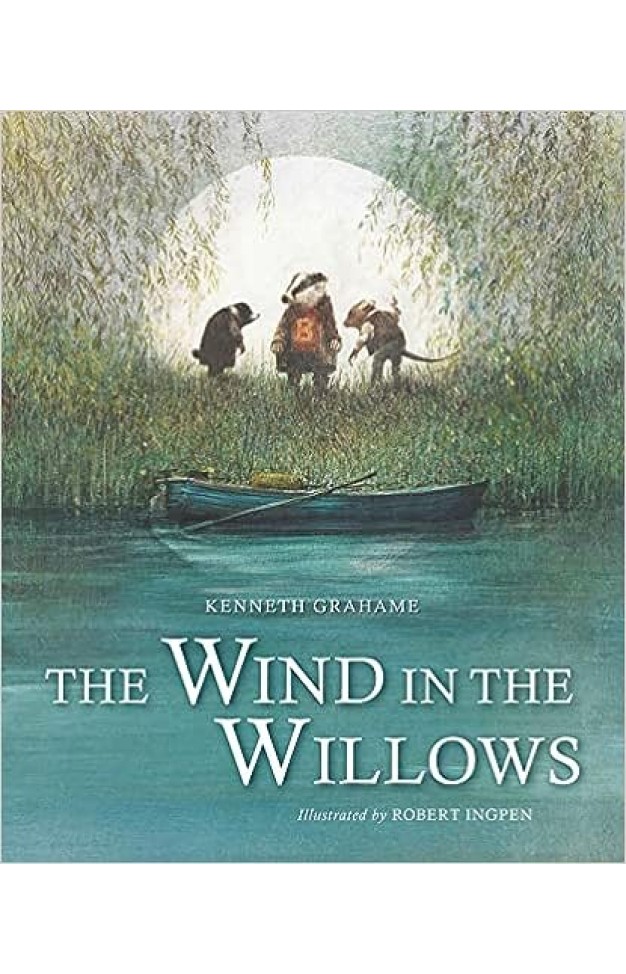
THE
WIND IN
THE WILLOWS
by
Kenneth Grahame
(1908) |
After
the death of his mother in 1864, a five-year-old Kenneth Grahame
went to live with his grandmother at Cookham Dean.
The nearby woods and river life would become the inspiration
for his famous children's book. |
|
| Anglo-Saxons
and Danes |
 Once
part of the West Saxon kingdom of Wessex.
Once
part of the West Saxon kingdom of Wessex.

 |
| Inventors
and Scientists |
Born in 1738 in Hanover, the astronomer
William Herschel died in Slough in 1822. He had moved to England
in 1755, where after settling in Bath in 1766, he started to build
his own telescopes. In 1781 he discovered the planet Uranus, the first
planet to be discovered since ancient times, and the first ever by
telescope. The following year George III made Herschel his private
astronomer and he moved to Slough to be near the King at Windsor.
Herschel is buried at Upton.
 William Herschel
 Herschel Society
|
| Monarchs |
|
House of Normandy |
 House of Normandy
 |
In
1121 William
the Conqueror's youngest son Henry
I
married his second wife Adela
of Louvaine at Windsor
Castle.
Henry
I
was buried at Reading
Abbey in 1135, ending a reign which had begun in 1100. On
Henry's death the succession became unclear, for William, his
only legitimate son and heir, had drowned in the White
Ship which sank in the English Channel
in 1120. Henry had only one other legitimate child, a daughter,
Matilda. But England was not yet ready for a female monarch
and so it was Henry's nephew Stephen who became king, a succession
which would lead to civil war.
Henry
I
|
|
House of Plantagenet |
|
House of Plantagenet |
Edward
III was born at Windsor
Castle
in 1312. His reign would last half a century, from the murder
of his father Edward
II
at Berkeley Castle in Gloucestershire
in 1327 until his own death in 1377.
Until his 18th birthday his mother Isabella of France and her
lover Roger Mortimer acted as his regents. Then in 1330 Edward
took back his throne, and - due to their complicity in his father's
death - had Mortimer executed and his mother kept at Castle
Rising Castle in Norfolk
for the rest of her life. After his eldest son and heir Edward
the Black Prince
died in 1376 he was succeeded the following year by his grandson
Richard
II.
Edward
III
|
|
| Royal
Consorts and Heirs |
|
House of Plantagenet |
William,
the Count of Poitiers and eldest son and heir to the throne
of Henry II, was buried in 1156 at the age of two at Reading
Abbey. It would be his younger brothers Richard (the Lionheart)
and John (Lackland) who would become king (in 1189 and 1199
respectively) on their father's death.

Philippa of Hainault,
Queen to Edward
III,
died at Windsor
Castle in
1369. She was buried in Westminster
Abbey.
She had married Edward in 1328 and two of her grandchildren
would ascend the throne as Richard II and Henry IV.
Philippa
of Hainault
Royal
consorts buried at Westminster Abbey
|
|
House of Stuart |
In
1637 Anne
Hyde, the first wife of James II, was born at Windsor. Although
she would never become Queen (she died in 1671 and it was not
until 1685 that her husband ascended to the throne), she did
give birth to two future Queens: Mary
II
in 1662 and Anne
in 1665.
Anne
Hyde
With
James II
|
|
| Writers
and Poets |
The
playwright and poet Oscar
Wilde was prosecuted for homosexuality in 1895, and found guilty,
imprisoned in Reading jail. On his release in 1897 he left England
to live in Paris where he died 3 years later.
Oscar
Wilde
Poetry Archive

I never saw a man that looked
With such a wistful eye
Upon that little tent of blue
Which prisoners call the sky.
The
Ballad of Reading Gaol (1898)
Something
was dead in each of us,
And what was dead was Hope.
The
Ballad of Reading Gaol (1898)
And the wild regrets, and the bloody sweats,
None know so well as I:
For he who lives more lives than one
More deaths than one must die.
The
Ballad of Reading Gaol (1898)
The
ashes of the poet Robert
Bridges
were interred at the church of St Peter and St Paul in the village
of Yattendon in 1930. He had been Poet
Laureate
since succeeding Alfred Austin in 1913 and was succeeded by John Masefield.
Robert
Bridges
Poetry Archive
Poets
laureate
|

|
|


