|
|
| Books |
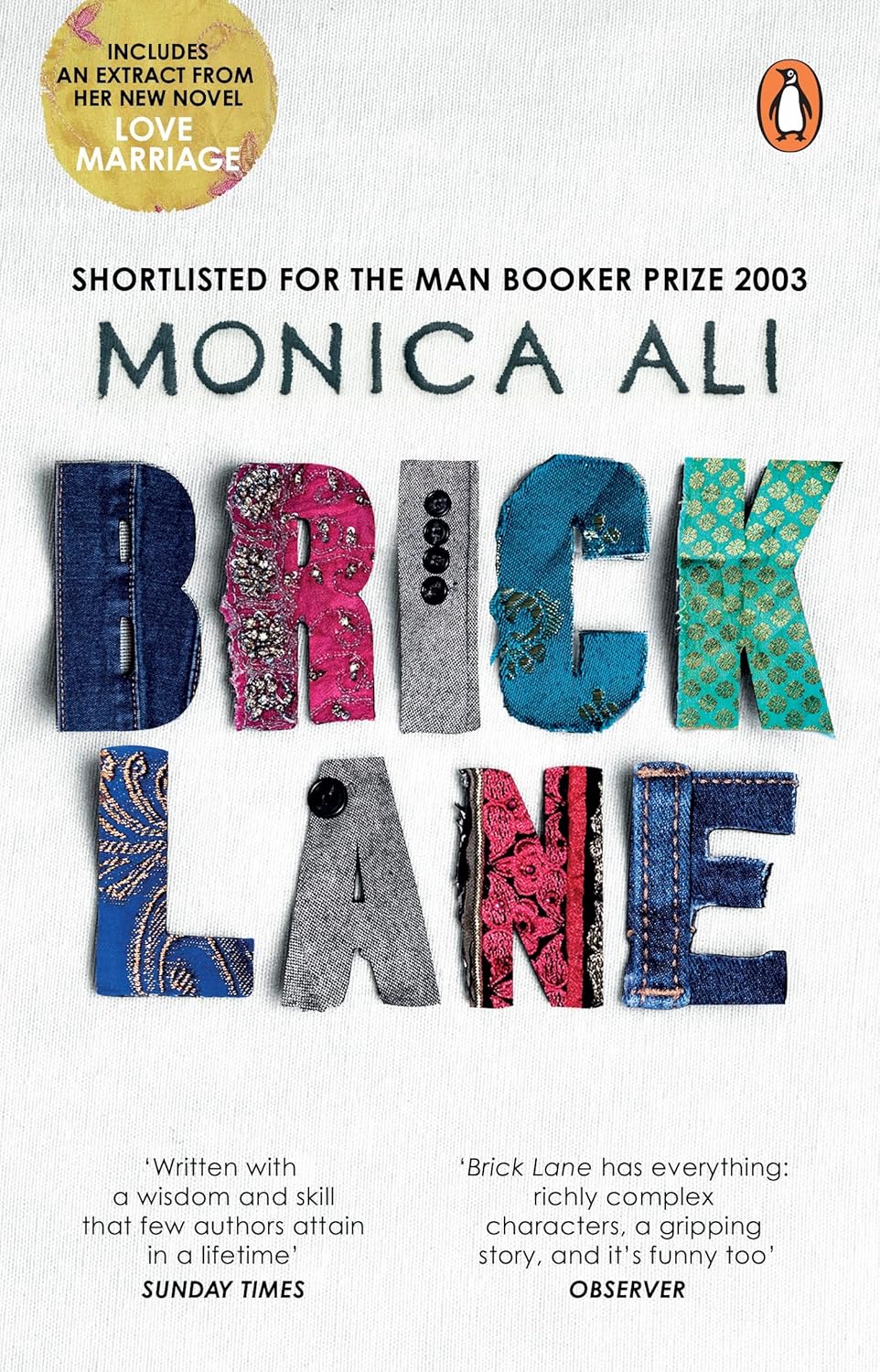
BRICK
LANE
by
Monica Ali
(2003) |
Nazneen
moves to Britain for an arranged marriage and settles in the
borough.
The book tells the story of her ensuing life in the Bangladeshi
community centred on Brick Lane. |
|
| London
| Tower Hamlets |
 The
County of London was formed in 1889 from parts of the ancient counties
of Middlesex, Kent and Surrey, with
the City of London remaining an independent body.
The
County of London was formed in 1889 from parts of the ancient counties
of Middlesex, Kent and Surrey, with
the City of London remaining an independent body.
In 1965 Greater London was formed,
taking in the rest of Middlesex (which no longer existed as a county)
together with parts of Essex and Hertfordshire and further areas of
Kent and Surrey.

Greater
London is made up of 13 Inner and 19 Outer London boroughs together
with the City of London.
Tower Hamlets once lay in Middlesex and is today
one of the 13 boroughs making up Inner London. Its western border
is marked by the Tower of London (and the City of London beyond),
to its north the London borough of Hackney, to its east the River
Lea (and the London borough of Newham) and along its southern border
the River Thames.
 London Boroughs
 |
| Anglo-Saxons
and Danes |
|
Anglo-Saxon Kings
Danish Kings |
The
borough once lay in Middlesex which once formed the kingdom
the kingdom of the Middle Saxons, so
named because their kingdom lay between those of the East Saxons (Essex)
and the West Saxons (Wessex).

 |
|
Royal Consorts and Heirs |
|
Tower of London |
|
Famous
people imprisoned at the Tower of London |
Accused
of adultery Henry VIII's second wife Anne
Boleyn was beheaded privately on Tower Green at the Tower
of London
in
1536.
She is buried in the chapel there.
Queen since 1533 when they had been secretly married, she gave
birth to the future Elizabeth
I
the same year.
 Anne
Boleyn
Anne
Boleyn
 Anne
Boleyn
Anne
Boleyn
Henry
VIII's fifth wife Catherine
Howard became queen in 1540 but was beheaded in 1542 on
Tower Green at the Tower
of London.
She is buried in the chapel there.
Catherine
Howard
Guilford
Dudley, husband of - and for nine
days consort to - Lady Jane Grey was
imprisoned with his wife at the Tower
of London
on the orders of Mary
I in
1553. He was executed publicly on Tower
Hill on the same day as Lady Jane in 1554. He is buried
with her
in the chapel there.
|
|
| World
Heritage Sites |
The Tower
of London
was designated a World Heritage Site in 1988. During history the Tower
has had many uses including that of a mint, a zoo, an armoury and
a favoured Royal palace but the main and most famous use was as a
prison and place of execution for many prominent people down through
the ages. The Crown Jewels are also kept there.
Famous
people imprisoned at the Tower of London
|
| Writers
and Poets |
The
pioneering feminist and writer Mary
Wollstonecraft was born in Spitalfields in 1759. She wrote A
Vindication of the Rights of Women and was the mother of Mary
Shelley.
Mary
Wollstonecraft
Mary
Wollstonecraft

I do not wish them (women) to have power over men; but over themselves.
A Vindication of the Rights of Women (1792)
A slavish bondage to parents cramps every
faculty of the mind.
A Vindication of the Rights of Women (1792)
|

|
|