|

|
|
| Books |
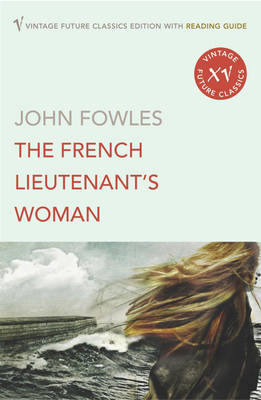
THE
FRENCH
LIEUTENANT'S WOMAN
by
John Fowles
(1969) |
Lyme
Regis, 1867. Sarah Woodruff often stands alone looking out to
sea from the harbour wall of the coastal town.
Abandoned by a French officer and shunned by the local population,
she one day is noticed by Charles Smithson. |
|
|
Anglo-Saxons and Danes |
 Anglo-Saxon Kings
  Danish Kings
 |
Once
part of the West Saxon kingdom of Wessex.

Ethelbald
was the first of four brothers to become King of Wessex. He died in
860 and was buried in Sherborne
Abbey.
Ethelbald's
younger brother Ethelbert succeeded
him as King. He died in 866 and like his brother was buried in Sherborne
Abbey.
The
third brother to became King of Wessex was Ethelred
I. He died in 871 from injuries received at the Battle of Merton
and was buried in Wimborne
Minster. He was succeeded by the fourth and youngest brother,
Alfred
the Great.
Edward
the Martyr ruled England from 975 until his death in 978 when
he was killed at Corfe
Castle
by supporters (possibly including Elfrida, his step-mother and Queen)
of his half-brother Ethelred, who succeeded him. He was buried in
Shaftesbury
Abbey.
The
Danish King of England, Denmark and Norway Canute,
famous for trying to turn back the waves, died at Shaftesbury
in 1035. He
was buried in Winchester
in Hampshire.
 King
Canute
King
Canute
Monarchs
buried at Winchester

 |
| Areas of Outstanding
Natural Beauty | National Landscapes |
The Dorset
National Landscape was designated in 1957 and covers 44% of the county,
including much of the county's coastline. The protected area stretches
from Lyme Regis in the west to Brownsea
Island near Poole in the east and includes such beauty spots as
Lulworth Cove and Chesil Beach.
Cranborne
Chase and the West Wiltshire Downs was designated in 1981 and
spreads across four counties with the majority of its southern portion
lying in Dorset. The mainly chalk landscape includes the wooded Vale
of Wardour which separates Cranborne
Chase in the south from the Wiltshire
Downs in the north. The area was once heavily forested and home
to several royal hunting forests of which remnants still remain.
|
|
Writers
and Poets
|
|
Thomas
Hardy was born at Upper
Bockhampton in 1840. He lived in the cottage until 1862 and
wrote Far From the Madding Crowd there. From 1885 until his
death in 1928 he lived at Max
Gate, the house that he built in Dorchester. His ashes are interred
at Westminster
Abbey but his heart was buried at the church in the village
of Stinsford.
Thomas
Hardy
Famous
people buried at Westminster Abbey
 Thomas Hardy Society

She whose youth had seemed to teach that
happiness was but the occasional episode in a general drama of pain.
The Mayor of Casterbridge (1886)
And meadow rivulets overflow,
And drops on gate-bars hang in a row,
And rooks in families homeward go,
And so do I.
Weathers (1922)
The later intelligence office and novelist, John
Le Carré was born in 1931 in Poole as David Cornwell.
In
1963 John Le Carré was awarded a Gold Dagger from the Crime
Writers' Association for The Spy Who Came in From the Cold
and another in 1977 for The Honourable Schoolboy. In 1988
he was awarded the Diamond Dagger for his lifetime contribution
to crime writing.
John
le Carré
In
1972 the poet Cecil
Day-Lewis
(father of the actor Daniel Day-Lewis) was, like Thomas Hardy, also
buried at Stinsford. He had been Poet
Laureate
since 1968 and was succeeded by Sir John Betjeman.
Cecil
Day-Lewis
Poets
laureate
John
Fowles, author of The Magus and The French
Lieutenant's Woman, lived at Belmont - his house which overlooked
the historic harbour wall known as the Cobb - in Lyme Regis from
1969 until his death in 2005.
John
Fowles
Whole sight; or all the rest is desolation.
Daniel Martin - Opening line of novel (1977)
The playwright Tom
Stoppard died at his home near Blandford in 2025. Born in
Czechoslovakia in 1937 he came to Britain after World War Two and
made his name with Rosencrantz and Guildenstern are Dead.
He also wrote in other genres and was awarded an Academy Award for
the screenplay for Shakespeare in Love (1998).
Tom
Stoppard
Life is a gamble at terrible odds - if
it was a bet, you wouldn't take it.
Rosencrantz
and Guildenstern are Dead
(1967)
|

|
|


