
 |
 |
 |
 |
 |
 |
 |
 |
 |
 |
| Genealogical and historical information and links for anyone researching their ancestors in England and the British Isles |
Home ==> County Links ==> Oxfordshire
<== Nottinghamshire
Shropshire ==>

| Themes | Explorers and Adventurers | Nobel Prize Winners |
| Actors and Directors | Famous People | Places of Interest |
| Anglo-Saxons and Danes | Historic Events | Prime Ministers |
| AONB (National Landscapes) | Inventors and Scientists | Royal Consorts and Heirs |
| Artists and Architects | Monarchs | World Heritage Sites |
| Composers and Musicians | National Parks | Writers and Poets |
|
|
||||||
| Oxfordshire |
|
|
| Anglo-Saxons and Danes |
 Anglo-Saxon Kings
  Danish Kings
 |
The King of Wessex Alfred
the Great, was born at Wantage (then in Berkshire) in 849. Alfred
the Great
Alfred
the Great Edward
the Confessor was born at Islip around 1003.
Edmund II
died in Oxford in 1016.
Edmund
II
In
1040 the son of King Canute and Danish King of England Harold
I died in Oxford. Edward
the Confessor was born at Islip around 1003.
Edmund II
died in Oxford in 1016.
Edmund
II
In
1040 the son of King Canute and Danish King of England Harold
I died in Oxford.  |
| Areas of Outstanding Natural Beauty | National Landscapes |
|
|
|
Artists and Architects |
Painter,
craftsman, poet, publisher and socialist William
Morris
was buried in the village of Kelmscott in 1896.
William
Morris William Morris Society
 |
|
Inventors and Scientists |
|
The
physicist Stephen
Hawking was born in Oxford in 1942.
Stephen
Hawking |
| Monarchs | |||
|
| Nobel Prize Winners | ||||||||
|
|
Places of Interest |
||||
|
| Prime Ministers |
|
Prime Ministers |
For
Winston Churchill see Nobel
Prize Winners
Lord
North,
Prime Minister in 1770-82, was buried in 1792 at All Saints in the
village of Wroxton. His administration saw the Declaration of Independence
by the North American colonies and their loss in the resulting American
War of Independence.
Lord
North American War of Independence
Herbert
Henry Asquith,
Prime Minister from 1908-16, died in 1928 at Sutton Courtenay and
is buried at All Saints in the village
where in 1950 George Orwell was also buried. His Liberal administration
introduced old-age pensions for the first time but in 1916, two years
into World War One, he was replaced by David Lloyd George.
Herbert
Henry Asquith
Britain's
shortest serving Prime Minister, Elizabeth
Truss
was born in Oxford in 1975. After winning the Conservative Party leadership
election to succeed Boris Johnson she became Prime Minister on 6th
September 2022. She was forced to resign only 45 days later on October
25th and was succeeded by Rishi Sunak.
American War of Independence
Herbert
Henry Asquith,
Prime Minister from 1908-16, died in 1928 at Sutton Courtenay and
is buried at All Saints in the village
where in 1950 George Orwell was also buried. His Liberal administration
introduced old-age pensions for the first time but in 1916, two years
into World War One, he was replaced by David Lloyd George.
Herbert
Henry Asquith
Britain's
shortest serving Prime Minister, Elizabeth
Truss
was born in Oxford in 1975. After winning the Conservative Party leadership
election to succeed Boris Johnson she became Prime Minister on 6th
September 2022. She was forced to resign only 45 days later on October
25th and was succeeded by Rishi Sunak. |
| Royal Consorts and Heirs | ||
|
| World Heritage Sites |
|
The
birthplace of Winston Churchill, Blenheim
Palace was designated a World
Heritage Site by the UNESCO in 1987. The building stands in a
park designed by "Capability" Brown and was built on the
site of the Old Woodstock Palace. |
| Writers and Poets |
In
1606 the poet William D'Avenant was
born in Oxford. He succeeded Ben Jonson in 1638 as the second unofficial
Poet
Laureate.
He held the post until his death in 1668 when he was succeeded in
the now official post by John Dryden.
Poets
laureate
Another
poet laureate, Thomas Warton, died
in Oxford in 1790. He had been appointed Poet
Laureate
in 1785, succeeding William Whitehead. He was succeeded by Henry James
Pye. He is buried in Trinity College Chapel at Oxford University where
he had studied, been elected a fellow and had also held the post of
Professor of Poetry.
Thomas
Warton
Poets
laureate
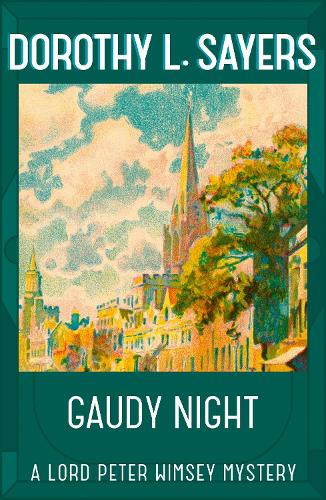
The
crime writer Dorothy
L. Sayers was born in Oxford in 1893. One of the first women to
graduate from Oxford University in 1915 she went on to write many
detective stories featuring Lord Peter Wimsey.
Dorothy
L. Sayers
Dorothy L. Sayers Society A society in which consumption has to be artificially stimulated in order to keep production going is a society founded on trash and waste, and such a society is a house built upon sand. Creed or Chaos? (1947)
The
crime writer P.D. James was born as
Phyllis Dorothy James in Oxford in 1920. She was in her forties when
she began to write and her debut novel Cover Her Face was also
the first of her fourteen Adam Dalgliesh books.In 1987 P.D. James was awarded the Diamond Dagger by the Crime Writers' Association for her lifetime contribution to crime writing. She died at her home in Oxford in 2014.
P.D.
JamesIf from infancy you treat chilldren as gods, they are liable in adulthood to act as devils. The Children of Men (1992)
The
poet Robert
Bridges
died in Oxford in 1930. He had been Poet
Laureate
since succeeding Alfred Austin in 1913 and was succeeded by John Masefield.
Robert
Bridges
Poets
laureate
The
Scottish author of The Thirty-Nine Steps John
Buchan, was buried at Elsfield in 1940.
John
Buchan
John Buchan Society
The
writer Martin Amis was born as Martin
Louis Amis in Oxford in 1949, the son of the author Kingsley Amis.
His first published novel was The Rachel Papers in 1973 but
the three novels which made his name were Money (1984), London
Fields (1989) and Time's Arrow (1991).In 2014 Amis wrote The Zone of Interest based on real events of Nazi officers at Auschwitz carrying on their everyday lives oblivious to what was going on in the concentration camp. Nine years later Jonathan Glazer used Amis' novel as the base for his film of the same name. Critically acclaimed the film went on to win the Academy Award for Best International Feature and the Grand Prix at Cannes. Martin Amis died at his home in Florida in 2023. Martin
Amis with Kingsley Amis (1975) Martin
Amis (1977) Martin
Amis (1995)
The
author of 1984 and Animal Farm George
Orwell, was buried All Saints in
Sutton Courtenay in 1950 in the same churchyard where the Prime Minister
Herbert Henry Asquith had also been buried in 1928. George
Orwell
George
OrwellDon't you see that the whole aim of Newspeak is to narrow the range of thought? In the end we shall make thoughtcrime literally impossible, because there will be no words in which to express it. Nineteen-Eighty-Four (1949)
C.S.
Lewis, author of The Chronicles of Narnia, died at The
Kilns - his Oxford home - on 22nd November 1963, the same day
as the American President John F. Kennedy and the author Aldous Huxley.
Lewis had lived at the house for the last 33 years of his life, written
many of his books there, and kept the house as an Oxford base after
he moved to Cambridge University in 1954. Lewis is buried at the nearby
cemetery at Headington Quarry.
C.S.
Lewis
C.S.
Lewis
Into
the WardrobeShadowlands C.S. Lewis: Personal experience isn't everything. Joy Gresham: I disagree. I think personal experience is everything. Lewis: So reading is a waste of time? Gresham: No, it's not a waste of time, but reading is safe, isn't it? Books aren't about to hurt you. Lewis: Why should one want to be hurt? Gresham: That's when we learn. From the film Shadowlands (1993) Screenplay: William Nicholson (Based on his play about Lewis's relationship with the American poet Joy Gresham) We read to know we're not alone. Shadowlands (1993) The pain now, is part of the happiness then. That's the deal. Shadowlands (1993) I've always found this a trying time of the year... The leaves not yet out. Mud everywhere you go. Frosty mornings gone. Sunny mornings not yet come. Give me blizzards and frozen pipes, but not this..., nothing time. Not this..., waiting-room of the world. Shadowlands (1993)
C.S.
Lewis's one-time close friend and the author of The Lord of the
Rings and The Hobbit J.R.R.
Tolkien, was buried in the Roman Catholic cemetery in Oxford in
1973. From 1939 Tolkien and Lewis used to meet regularly with other
writers at, among others, the Eagle and Child public house. Known
as the Inklings they would discuss literature and read out their works-in-progress.
J.R.R.
Tolkien
Tolkien Society In a hole in the ground there lived a hobbit. Not a nasty, wet hole, filled with ends of worms and an oozy smell, nor yet a dry, bare, sandy hole with nothing in it to sit down on or to eat: it was a hobbit-hole, and that means comfort. The Hobbit - Opening lines of novel (1937)
Agatha
Christie, creator of Hercule Poirot and Miss Marple, died in Wallingford
in 1976. She is buried at Cholsey.
Agatha
ChristieWar settles nothing... to win a war is as disastrous as to lose one! An Autobiography (1977)
In
1990 the writer Roald Dahl died in
Oxford. Known for his children's books, he was also a writer of adult
fiction and a screenwriter during his career (Chitty Chitty Bang
Bang and the fourth James Bond film You Only Live Twice).
The
novelist and philosopher Iris
Murdoch died in Oxford in 1999. Her 1978 novel The Sea, The
Sea had won the Booker
Prize.
Iris
MurdochWe live in a fantasy world, a world of illusion. The great task in life is to find reality. (The Times, 1983) |
| County Links | Genealogy in England |

| Preserve the past |
| And the future |
| Genealogy Links |
 |
 |
 |
| Record
Offices and Archives |
| Bodleian Library |
| Societies |
| Oxfordshire Architectural & Historical Society |