|

|
|
| Books |
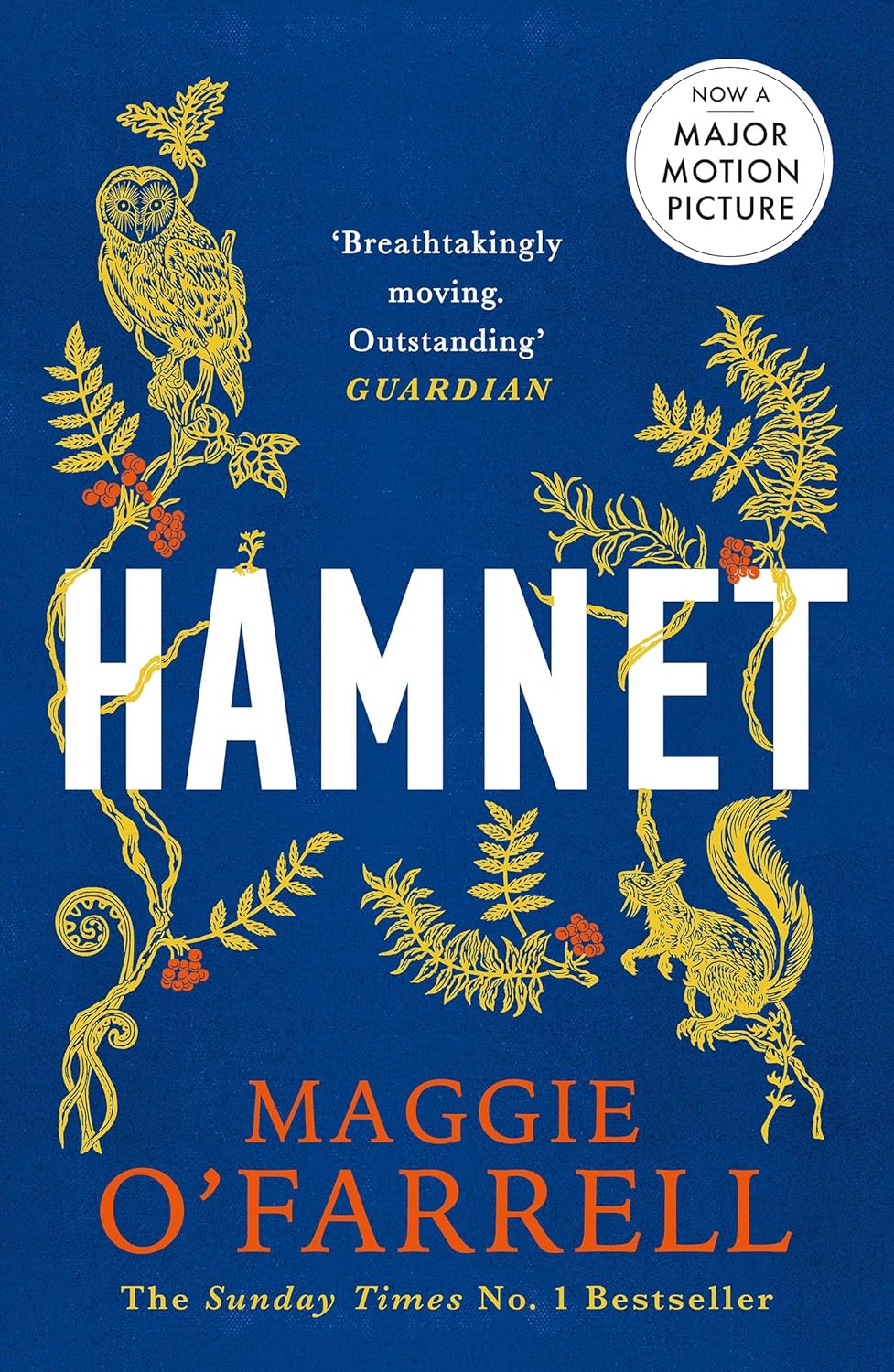
HAMNET
by
Maggie O'Farrell
(2020) |
How
do people cope with the death of a child? In 1596 Hamnet, the
twelve-year-old son of William Shakespeare and Agnes Hathaway,
dies of plague in Stratford-upon-Avon.
Maggie O'Farrell imagines the tragedy from Agnes' perspective
depicting how the life of the Shakespeare family may have been. |
|
| Actors
and Directors |
 The
film director Ken Loach was born in
Nuneaton in 1936. He worked as a director for the BBC where he developed
his lifelong interest in the realistic depiction of society's social
problems. His docudrama Cathy Come Home (1966) brought the
theme of homelessness into the spotlight. Kes (1970), one of
his first feature films, tells the story of a boy who having suffered
from abuse finds solace looking after a young kestrel.
The
film director Ken Loach was born in
Nuneaton in 1936. He worked as a director for the BBC where he developed
his lifelong interest in the realistic depiction of society's social
problems. His docudrama Cathy Come Home (1966) brought the
theme of homelessness into the spotlight. Kes (1970), one of
his first feature films, tells the story of a boy who having suffered
from abuse finds solace looking after a young kestrel.
Later Loach achieved many successes at the Cannes Film Festival with
several films winning jury prizes. He is one of the few directors
to have won the Palme d'Or twice, with The Wind That Shakes the
Barley (2006) and I, Daniel Blake (2016).
 Ken
Loach (1993)
Ken
Loach (1993)
Ken
Loach (2019)


|
| Anglo-Saxons
and Danes |
The
small kingdom of the Hwicce lay between
the kingdoms of Mercia to the north and that of the West Saxons (Wessex)
to the south.
|
| Areas of Outstanding
Natural Beauty | National Landscapes |
The
Cotswolds
stretch over six counties, with a portion of their western end lying
in Warwickshire. They became the country's largest designated area
on its creation in 1966. The area is distinctive due to the underlying
limestone rock which has created a unique landscape and habitat for
plants and animals.
|
| Inventors
and Scientists |
The Scottish engineer James
Watt died at his home Heathfield
Hall in Handsworth in Birmingham in 1819
and is buried nearby.
James
Watt

In 1886 the physician Edward Bach
was born in the village of Moseley near Birmingham. After studying
medicine at University College Hospital in London he set up a practice
in Harley Street but became disillusioned with medicine's concentration
on the disease rather than the person suffering it. This disillusion
led him to leave London and to search for new methods of healing he
believed could be found in nature. This search culminated in the Bach
Flower Remedies, a method of treating people's
emotional state and not the illness, using extracts of flowers. The
use of these remedies has since spread around the world.
 Bach Centre
|
| Nobel
Prize Winners |
|
Economics |
The
economist
John R. Hicks was born in Warwick in 1904. In 1972
he was the first Englishman to be awarded the Nobel
Prize for Economics which he shared with the American Kenneth
J. Arrow.
|
|
Peace |
The
politician (and half-brother of the Prime Minister Neville Chamberlain)
Austen Chamberlain was born as Joseph Austen Chamberlain
in Birmingham in 1863. He shared the Nobel
Prize for Peace with Charles G. Dawes in 1925 for their
negotiating of the Locarno Pact.
Austen Chamberlain
|
|
| Prime
Ministers |
 Prime Ministers
 |
Earl
of Wilmington
Prime Minister from 1742-43, was born as Spencer Compton at Compton
Wynyates House in Compton Wynyates in 1673.
Earl
of Wilmington
Born
as Arthur Neville Chamberlain in Edgbaston in Birmingham in 1869,
Neville
Chamberlain
became Prime Minister from 1937-40. In the interests of peace Chamberlain
followed a controversial policy of appeasement towards Adolf Hitler,
signing the Munich Agreement in 1938 after the invasion of Czechoslovakia.
When the policy failed he declared war on Germany a year later, but
criticism of his leadership and early military defeats led him to
stand down in 1940 in favour of Winston Churchill. Chamberlain died
6 months later.
Neville
Chamberlain

I believe it is peace for our time.
(Speech from 10 Downing Street, September 1938)
|
| Royal
Consorts and Heirs |
|
House of York |
Anne Neville
was born at Warwick Castle
in 1456. In 1472 she married the future Richard III at Westminster
Abbey and became Queen on his coronation in 1483. She died in
1485 before his short reign ended violently on the battlefield
at Bosworth later that year.
|
|

|
|


 Gunpowder Plot

