|
London
|
City
of Westminster |
|
|
| Books |
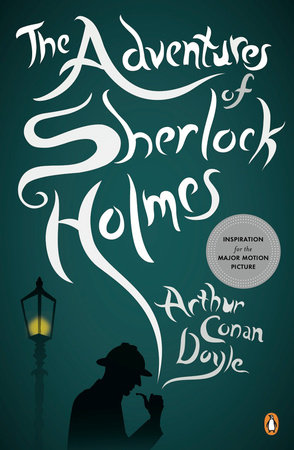
A
Scandal
in Bohemia
from
THE ADVENTURES OF SHERLOCK HOLMES
by
Arthur Conan Doyle
(1892) |
A
Scandal in Bohemia,
the first of Arthur Conan Doyle's 56 short stories featuring
Sherlock Holmes, starts as many others: the detective is visited
in his rooms at 221b Baker Street in Westminster by a prospective
client.
Seen as one of his best stories due to the character of Irene
Adler in whom Holmes finds his match, in more ways than one. |
|
| London
| City of Westminster |
 The
County of London was formed in 1889 from parts of the ancient counties
of Middlesex, Kent and Surrey, with
the City of London remaining an independent body.
The
County of London was formed in 1889 from parts of the ancient counties
of Middlesex, Kent and Surrey, with
the City of London remaining an independent body.
In 1965 Greater London was formed,
taking in the rest of Middlesex (which no longer existed as a county)
together with parts of Essex and Hertfordshire and further areas of
Kent and Surrey.

Greater
London is made up of 13 Inner and 19 Outer London boroughs together
with the City of London.
Westminster once lay in Middlesex and is today one
of the 13 boroughs making up Inner London. It lies on the River Thames
to its south and borders the City of London to the east and the London
borough of Kensington and Chelsea to the west.
 London Boroughs
 |
| Monarchs |
|
Norfolk House |
George
III was born at Norfolk House,
a lodging house in St James's Square in 1738. His parents had
taken up residence there after having been evicted from their
rooms in St James's Palace by George II, his predecessor whom
he would succeed in 1760. The following year he married Charlotte
of Mecklenburg-Strelitz at St
James's Palace
and ruled until his death in 1820. From 1811, suffering from
bouts of madness, his son the future George IV ruled in his
place as the Prince Regent.
 George
III
George
III
 George III

 |
|
| Prime
Ministers |
|
Prime Ministers |
| 18th
Century |
Born in 1708 in Westminster
the Earl
of Chatham (also known
as William
Pitt the Elder)
became Prime Minister from 1766-68.
He was the father of William Pìtt, the Younger who would
also become Prime Minister and a predecessor George Grenville
was his brother-in-law. He was
buried in 1778
in Westminster
Abbey .
Earl
of Chatham
Famous
people buried at Westminster Abbey
George
Grenville,
Prime Minister in 1753-65, was born in Westminster in 1712.
He died in Bolton Street in Mayfair in 1770.
George
Grenville
Prime
Minister in 1762-63, the Earl
of Bute
was born as John Stuart in 1713 in Parliament Square. He died
in 1792 in Grosvenor Square in Mayfair.
Earl
of Bute
Lord
North,
Prime Minister in 1770-82, was born as Frederick North in Albemarle
Street in Piccadilly in 1732. He died in Grosvenor Square, Mayfair
in 1792 and is buried in Wroxton in Oxfordshire.
His administration saw the Declaration of Independence by the
North American colonies and their loss in the resulting American
War of Independence.
Lord
North
American War of Independence
The
Earl
of Wilmington,
Prime Minister from 1742-43, died in St James Square in 1743.
Earl
of Wilmington
The
first "Prime Minister"
Robert Walpole died in 1745 in Arlington Street and was
buried at the family estate Houghton Hall in Norfolk.
Walpole served as First Lord of the Treasury under the first
of the Hanoverian monarchs George
I.
The German-born King could not speak English which led to Walpole
exercising much more power than had before been the case for
the position he held. He governed as the most important or "Prime"
Minister of a small group of Ministers, the beginnings of the
future Cabinet system of government.
Walpole was not only the first to hold the post but he also
held it the longest, staying in office for a total of 20 years
and 314 days between 1721 and 1742.
Robert Walpole
Henry
Pelham became Prime Minister from 1743-54 and also died
in Arlington Street in 1754. He was succeeded by his brother
the Duke of Newcastle.
Henry
Pelham
|
| 19th
Century |
Spencer
Perceval
who became Prime Minister in 1809-12, was born in Audley Square
in Mayfair in 1762. He was the only Prime Minister to be assassinated
when he was shot in 1812 by a disgruntled businessman in the
lobby of the House of Commons. He is buried at St Luke's in
Charlton.
Spencer
Perceval
George
Canning,
Prime Minister in 1827, was born in Marylebone in 1770. He died
the same year at Chiswick
House after only 119 days in office. He is buried in Westminster
Abbey.
George
Canning
Famous
people buried at Westminster Abbey
In
1779 Viscount
Melbourne,
twice Prime Minister in 1834 and 1835-41, was born as William
Lamb at Melbourne House in Piccadilly.
Viscount
Melbourne
Viscount
Palmerston,
twice Prime Minister in 1855-58 and 1859-65, was born at 20
Queen Anne's Gate, Westminster in 1784. He
was
buried in 1865 in Westminster
Abbey.
Viscount
Palmerston
Famous
people buried at Westminster Abbey
The twice Prime Minister from 1846-51 and 1865-66 Earl
Russell, was born as John
Russell in Hertford Street in Mayfair in 1792.
Earl
Russell
The twice Prime Minister in 1868 and 1874-80 Benjamin
Disraeli, died at his home
at 19 Curzon Street, Mayfair in 1881. He is buried in the village
of Hughenden in Buckinghamshire.
Benjamin
Disraeli

Youth is a blunder; Manhood a struggle;
Old Age a regret.
Coningsby (1844)
You know who the critics are? The men
who have failed in literature and art.
Lothair (1870)
William Petty, the Earl
of Shelburne, Prime Minister in 1782-83, died at his home
Lansdowne House in Berkeley Square, Westminster in 1805.
Earl
of Shelburne
William
Pitt, the Younger, twice
Prime Minister in 1783-1801 and 1804-06, was
buried in 1806 in Westminster
Abbey. The
second son of the former Prime Minister the Earl of Chatham,
he was aged only 24 in 1783, the youngest Prime Minister ever.
Pitt the Younger's second administration was faced with the
growing Napoleonic threat to Europe and it was Pitt who formed
the coalition of countries which defeated the French at the
Battle
of Trafalgar.
Pitt's glory was shortlived and in the same year the coalition
fell apart and Napoleon was victorious at Austerlitz. Pitt died
the following year and it was nearly a decade before Napoleon
was eventually defeated at Waterloo in 1815.
William
Pitt, the Younger
Battle of Trafalgar
Famous
people buried at Westminster Abbey
William Bentinck, the Duke
of Portland served as Prime Minister in 1783 and 1807-09.
He was buried in 1809 at the parish church in St Marylebone.
Duke
of Portland
The
Earl
of Rosebery, Prime Minister
from 1894-95, was born at 20 Charles Street, Westminster in
1847.
Earl
of Rosebery
Robert Peel,
twice Prime Minister in 1834-35 and 1841-46, fell from his horse
while riding in London and died from his injuries at his home
in Whitehall Gardens in 1850. He had created London's police
force whose members were nicknamed "Bobbies" after
him. He is buried at Drayton Basset in Staffordshire.
Robert Peel
George
Gordon, the Earl
of Aberdeen,
Prime Minister in 1852-55, died at St James's in 1860 and was
buried in the vault at St
John the Evangelist at Stanmore (then in Middlesex). His
administration was responsible for Britain entering the Crimean
War in 1854 and due to its mismanagement he was forced to resign
in 1855.
Earl
of Aberdeen
Prime
Minister four times in 1868-74, 1880-85, 1886 and 1892-94, William
Ewart Gladstone
was buried in 1888 in Westminster
Abbey. In 1892 Gladstone he had become the oldest ever Prime
Minister when at the age of 83 he formed his fourth government.
William
Ewart Gladstone
Famous
people buried at Westminster Abbey
|
| 20th
Century |
Born
in Mayfair in 1903,
Alec Douglas-Home
became Prime Minister in 1963-64.
Alec Douglas-Home
Prime
Minister from 1905-08,
Henry Campbell-Bannerman
died at 10
Downing Street in 1908, a few weeks after resigning.
Henry Campbell-Bannerman
Andrew
Bonar Law
became Prime Minister in 1922-23. In 1923 his ashes were interred
at Westminster
Abbey.
Andrew
Bonar Law
Famous
people buried at Westminster Abbey
Neville
Chamberlain,
Prime Minister from 1937-40, died
6 months after leaving office and his
ashes are interred at
Westminster Abbey. In the interests of peace Chamberlain
followed a controversial policy of appeasement towards Adolf
Hitler, signing the Munich Agreement in 1938 after the invasion
of Czechoslovakia. When the policy failed he declared war on
Germany a year later, but criticism of his leadership and early
military defeats led him to stand down in 1940 in favour of
Winston Churchill.
Neville
Chamberlain
Famous
people buried at Westminster Abbey
Prime
Minister in 1945-51, Clement
Attlee
died in 1967 at Westminster Hospital. His ashes are interred
at Westminster
Abbey. His Labour administration governed in the turbulent
post-war years and revolutionized British society by introducing
the Welfare
State
including in 1948 the National Health Service. In 1947 and 1948
India and Burma gained independence, the beginnings of the dismantling
of the British Empire.
Clement
Attlee
Welfare State
Famous
people buried at Westminster Abbey
Britain's
first woman Prime Minister from 1979-90, Margaret
Thatcher
died at the Ritz Hotel in London in 2013 and her ashes were
interred at the Royal Hospital in Chelsea.
Margaret
Thatcher
 Margaret
Thatcher Foundation
Margaret
Thatcher Foundation
I am not a consensus politician.
I'm a conviction politician.
(1975)
I like Mr Gorbachev. We can do business
together.
(Interview, 1984)
We have become a grandmother.
(The Times, 1989)
|
|
| Royal
Consorts and Heirs |
|
Westminster Palace |
Matilda of Scotland (born as Edith of Scotland), married
Henry
I in 1100, the year he became king. She was queen until
her death at Westminster
Palace
in
1118 and was buried in Westminster
Abbey.
Matilda's father had been the Scottish king, Malcolm III and
her three brothers: Edgar, Alexander and David all ascended
the Scottish throne as did a half-brother Duncan and so the
marriage had ensured peace between the two countries.
Henry
I
Royal
consorts buried at Westminster Abbey
Born
at
Westminster
Palace
in 1466, Elizabeth
of York married Henry VII in 1486 and was Queen until
her death during childbirth at the Tower
of London
in
1503. She is buried in Westminster
Abbey
and
was the mother of Henry
VIII.
Elizabeth
of York
Royal
consorts buried at Westminster Abbey
In
1485 Anne Neville, the Queen
of Richard III since 1483, died at Westminster
Palace.
She is buried in Westminster
Abbey. Her husband was killed at the Battle of Bosworth
later the same year.
Royal
consorts buried at Westminster Abbey
Margaret
Tudor was born at Westminster
Palace
in
1489, the eldest daughter of Henry VII and sister of Henry VIII.
In 1503 she married James IV of Scotland and in 1513, at the
age of one, her son became James V. Her great-grandson united
the Scottish and English Crowns as James
I
of England.
Margaret
Tudor
|
|
St James's Palace |
In 1612 Henry,
Prince of Wales, the eldest son
of James I of England, died from
typhoid at St
James's Palace after contracting the disease whilst swimming
at Windsor. It was his brother who was crowned Charles I on
their father's death in 1625. Henry
is buried in Westminster
Abbey.
Henry,
Prince of Wales
Royal
consorts buried at Westminster Abbey
In
1671 Anne
Hyde, the first wife of James II died at St
James's Palace.
Although she never became queen (it was not until 1685 that
her husband ascended the throne), she did give birth to Mary
II
in 1662 and Queen Anne
in 1665. She is buried in Westminster
Abbey.
Anne
Hyde
With
James II
Royal
consorts buried at Westminster Abbey
In
1688 James
Francis Edward Stuart was born at St
James's Palace.
The Old Pretender was the only child of James II and his second
wife Mary of Modena. Later the same year the queen had to flee
with her son to France when the king was forced into exile during
the Glorious
Revolution.
On his father's death in 1701 James Stuart proclaimed himself
James III , and would have been heir to the throne on the death
of his half-sister Queen Anne
in 1714, but he refused to renounce his Catholicism and so was
excluded from the succession. After several failed attempts
at reclaiming the crown, including a major rebellion in 1715,
he settled in Italy,
passing the mantle of the Jacobite
cause to his son Charles.
James Stuart died in Rome in 1766 and was buried in the crypt
of St Peter's Basilica where his two sons - Charles
Edward and
Henry
Benedict -
would
eventually also be buried. They were the last of the Stuart
royal line.
James
Francis
Glorious Revolution
Caroline of Ansbach
died in 1737 at St
James's Palace. She had married the future George II in
1705 and became queen on his accession in 1727. Her grandson
succeeded to the throne as George III. She is buried in Westminster
Abbey.
Caroline
of Ansbach
Royal
consorts buried at Westminster Abbey
Sophia Charlotte of Mecklenburg-Strelitz
married George
III at St
James's Palace in 1761. She was queen until her death in
1818 at Kew
Palace
in Surrey and had given birth to the future George IV in 1762
and William IV in 1765 and was the grandmother of Queen Victoria.
Sophia Charlotte of Mecklenburg-Strelitz
|
|
Leicester House |
Elizabeth,
Queen of Bohemia, the eldest daughter
of James I,
died in Westminster in 1662 whilst on a visit to her nephew
Charles II. She had become known as the Winter Queen due to
the short reign of her husband - Frederick V - as King of Bohemia.
The couple had been forced to leave Prague and had settled in
the Hague where Elizabeth would spend the rest of her life.
She is buried with her parents in Westminster
Abbey.
After Queen Anne died childless in 1714 the Act of Settlement
meant that it was Elizabeth's grandson who was crowned George
I. The aim of the Act: to exclude the Catholic heirs of James
II and Mary of Modena so that the monarchy would remain Protestant.
Elizabeth,
Queen of Bohemia
Royal
consorts buried at Westminster Abbey
In 1751 George II's eldest son Frederick
Louis, Prince of Wales died of pneumonia
at Leicester House and so it was his son who was crowned George
III in 1760. Frederick
is buried in Westminster
Abbey.
Frederick
Lewis, Prince of Wales
Royal
consorts buried at Westminster Abbey
|
|
|
Writers and Poets |
|
18th Century |
The
author of the first gothic novel The Castle of Otranto and
son of the the first "Prime Minister" Robert Walpole,
Horace Walpole was born at Arlington
Street in 1717. He died at his home in Berkeley Square in 1797
and is buried with his father at Houghton Hall near New Houghton
in Norfolk.
Horace
Walpole
In
1718 the poet Nicholas
Rowe
was buried in Westminster
Abbey. He had succeeded Nahum Tate as Poet
Laureate
in 1715 and was succeeded by Laurence Eusden.
Nicholas
Rowe
Famous
people buried at Westminster Abbey
Poets
laureate
In
1757 the artist and poet William
Blake was born in Soho.
William
Blake
Famous
London cemeteries
I was angry with my friend;
I told my wrath, my wrath did end.
I was angry with my foe:
I told it not, my wrath did grow.
A
Poison Tree (1794)
To see a world in a grain of sand
And a heaven in a wild flower
Hold infinity in the palm of your hand
And eternity in an hour.
Auguries
of Innocence (1803)
The
writer Samuel
Johnson,
better known as Dr Johnson, was
buried in Westminster
Abbey in 1784. It was whilst living at 17
Gough Square in the City
of London that he compiled his famous dictionary of the
English language.
Samuel
Johnson
Famous
people buried at Westminster Abbey
A man, doubtful of his dinner, or trembling
at a creditor, is not much disposed to abstracted meditation,
or remote enquiries.
Lives of the English Poets (1779-81)
Lord
Byron was born in Holles Street off Oxford Street in 1788.
Lord
Byron
When we two parted
In silence and tears,
Half broken-hearted
To sever for years,
Pale grew thy cheek and cold,
Colder thy kiss.
When
we two parted (1816)
He thought about himself, and the whole
earth,
Of man the wonderful, and of the stars,
And how the deuce they ever could have birth;
And then he thought of earthquakes, and of wars,
How many miles the moon might have in girth,
Of air-balloons, and of the many bars
To perfect knowledge of the boundless skies;
And then he thought of Donna Julia's eyes.
Don Juan (1819-24)
|
|
19th Century |
The
poet and artist Dante
Gabriel Rossetti was born as Gabriel Charles Dante
Rossetti at 110 Hallam Street, Westminster in 1828.
Dante
Gabriel Rossetti
The
author of Frankenstein and wife of the poet Percy Shelley,
Mary
Shelley died at her home at 24 Chester Square, Westminster
in 1851. She was born as Mary Wollstonecraft Godwin, her parents
were the writer and feminist Mary Wollstonecraft and the philosopher
William Godwin. She is buried with her parents in Bournemouth,
Hampshire.
Mary
Shelley
The
creator of Winnie the Pooh the children's author A.A.
Milne, was born as Alan Alexander Milne in St
John's Wood in 1882.
A.A.
Milne
|
|
20th Century |
The
journalist and thriller writer Ian
Fleming was born in Mayfair in 1908. Starting with Casino
Royale (published 1953) he wrote 12 novels and 2 short story
collections featuring the British spy James Bond. All of the
books were made into highly successful films, starting with
Dr No in 1962.
Ian
Fleming
Bram
Stoker, author of Dracula, died in at his home on
St George's Square in Pimlico in 1912. He was interred at Golders
Green Crematorium.
Bram
Stoker
H.G.
Wells,
the author of The Time Machine (1895) and The War
of the Worlds (1898),
died at his home at 13 Hanover Terrace in Westminster in 1946.
He was cremated at Golders
Green Crematorium.
H.G.
Wells
H.G.
Wells Society
Human history becomes more and more
a race between education and catastrophe.
The Outline of History (1920)
The
author of 1984 and Animal Farm George
Orwell, died at Westminster Hospital in London in 1950.
He is buried in Sutton Courtenay in Oxfordshire.
George
Orwell
George
Orwell
Who controls the past controls the future: who controls the
present controls the past.
Nineteen-Eighty-Four (1949)
|
|

|
|